
The Dehumanization of Dating Apps
The shared smile between strangers who just met. Your legs rubbing against each other under a table because they don’t know what else to do with the energy electrifying between them in the moment. Perhaps the friend you’re holding eye contact with a beat too long that there’s always been a je ne sais quoi feeling with when you both damn well sais quoi. The friend of a friend you meet and hit it off with, having heart to hearts late into the night in between exchanges of your tongues. Maybe it’s a nod and a shrug in a poorly lit area, no words exchanged, just body talk. These are scenarios I look back on often. Some of the greatest hits of my past. They all have one thing in common.
None of them started on a dating app.
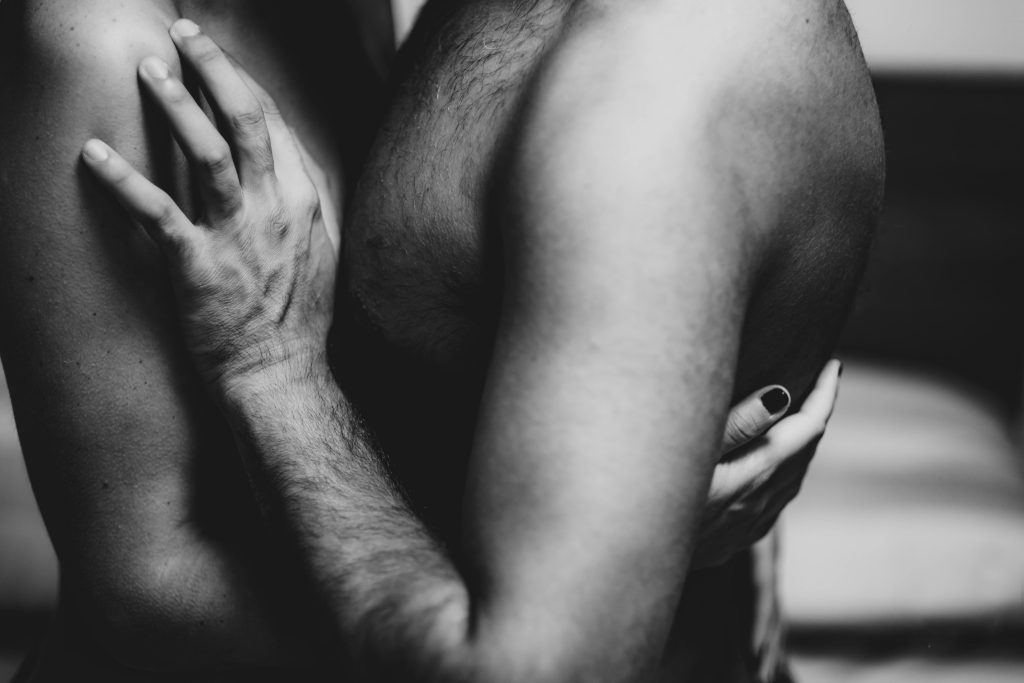
It goes like this: you download the app, you create your profile, curate your photos (public and private), the “About Me” sections you rewrite over and over again. The version of you you send as if it is a press release. You have designed a version of yourself before you’ve even seen who is in the room. You put in all this work, all of it reduced to a few seconds of someone seeing your profile photo (your first impression) and deciding whether they will swipe left or right.
Some didn’t have a choice geographically. The apps became real life, especially if you were geographically far away from places where those in person encounters are more common. You could be in a smaller community that begins to feel incestuous. You could be one of 5 gay individuals in a twenty-five mile radius. You could belong to a family that shames premarital sex, a code you don’t align with. Maybe you don’t have the ability to relocate to “The big city”. The app fills that gap, it puts you in touch with the best possible chance of connecting. Those offline encounters have a level of privilege most of us never stop to examine. Yet, we still commonly find ourselves in the doomscroll of who to fuck. The problem isn’t the apps, the problem stems from memorizing the lines from a script that was handed to us, and told us how to interact. We became masters of theory, but forgot how to hone the craft in practice – in face to face meetings, when the face is in front of you in the real world, not on the screen.

A dating profile flattens you to selectable attributes before any authentic human signal is exchanged. Still images and text, frozen in time. You are a set of answers before you become a person. But the other side is that the apps offer a buffer of safety. You can ghost someone, unmatch them, block them, and close the app. No consequences, no uncomfortable conversation. That buffer is a defense mechanism, but where is the line when that defense mechanism begins to become a prison? It conditions you into believing that vulnerability has an opt-out feature. Real rooms don’t have that. Real rooms also don’t have endless options, we tend to get caught up in decision paralysis. You keep scrolling because the app trained you to, not because there are no viable options. You stop investing. Then come the pop-ups to sign up for premium, all the good stuff is behind a monthly or annual subscription. Desirability comes with a price, surely if you throw money at it, Prince Charming is hiding behind the pay wall. The script didn’t just fail to replicate authentic connection, it made vulnerability feel optional.
The approach can feel daunting when the encounter occurs in person. We overcompensate, we don’t know what to do with our hands, we feel like a fish out of water. Our thoughts race about rejection and misunderstanding the situation. But here’s a question: What if it’s just the in-person rejection I am afraid of? It’s easier to brush off not being mutually “liked” on the app than it is face to face. It’s also easier to reject someone over an app than it is in person. Over time, without being conscious of it, the muscle memory weakens, you stop holding eye contact, you stop making moves in rooms. You outsourced the risk to an algorithm and somewhere along the way forgot that risk was the point. To connect with the stranger, the friend, the friend of a friend, we have to learn how to become readable in a room again. You have to let desire show on your face and in your body language before you know if it’s reciprocated. Remember your mating call.
The apps aren’t the problem. The formula we adjusted to is. But those unscripted, unplanned encounters feel different. Transactional and electric interactions can exist both online and in person, but the electricity takes center stage when it’s in person. It is something that happens upon you, rather than something that was calculated out with time, thought and redrafting responses. The improvisation is the evidence that we knew how to flirt and reject before the script took over and fed us responses. The unscripted scene is where we are more authentically ourselves than any version we can try to portray digitally. Seeing someone’s quirks, the way they interact with people around them in real time before we get one-on-one tells us more than a dating profile ever could. That person is real.