
A Continuation on Shame
Shame comes from the inside, via external sources. The versions of ourselves we offer the world are external, guided by the internal. It was unintentional that my first two writings here would walk hand in hand together. One dictates the other, but it’s hard to decipher whether the chicken or the egg came first. We discussed shame living inside us, but how does that feeling dictate our actions? It choreographs and blocks how we move through situations; it tells us which version of self would be the best character for the scene. Sometimes we hide it well, sometimes we are just fooling ourselves. A game of tug-of-war that we are never truly sure which team we are on.
Remember that guilt attacks what you did, shame attacks who you are. Guilt is evidence based, shame is a narrative.
One of you has danced this dance for years, calm, cool, collected, making the tango look simple. One of you has two left feet, your audience can feel your panic from the nosebleeds as you try to keep up and not stumble. Whether you’ve mastered the steps or faking it, you’re both still dancing to the same song. There’s a film about this dance, but the song is a body in a box. Alfred Hitchcock’s Rope: A masterclass in the observation of shame, all of it living between the lines.
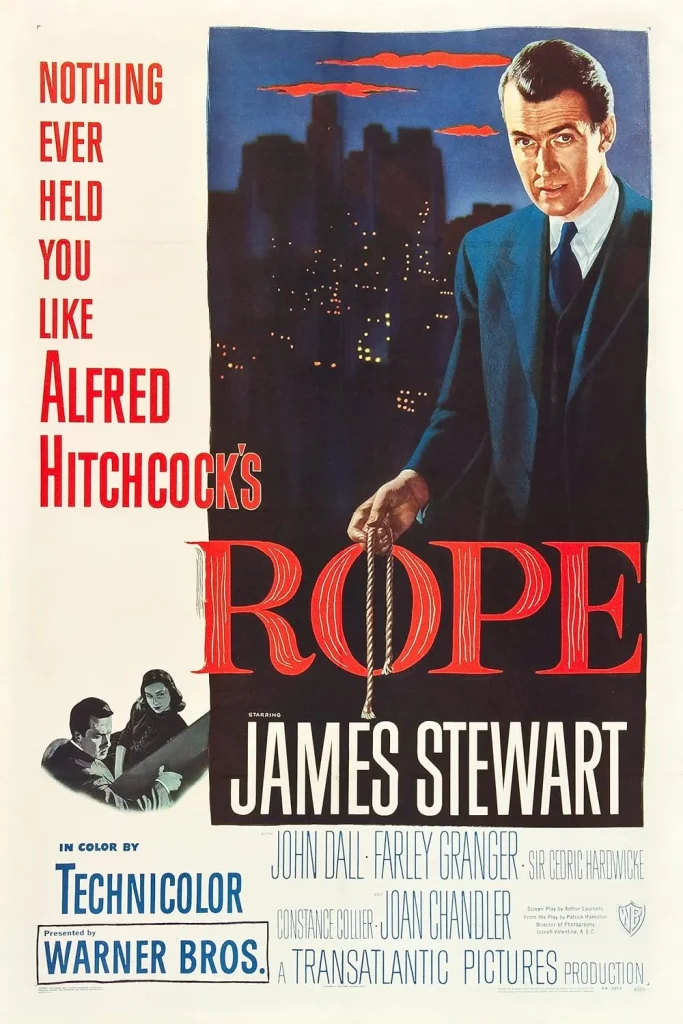
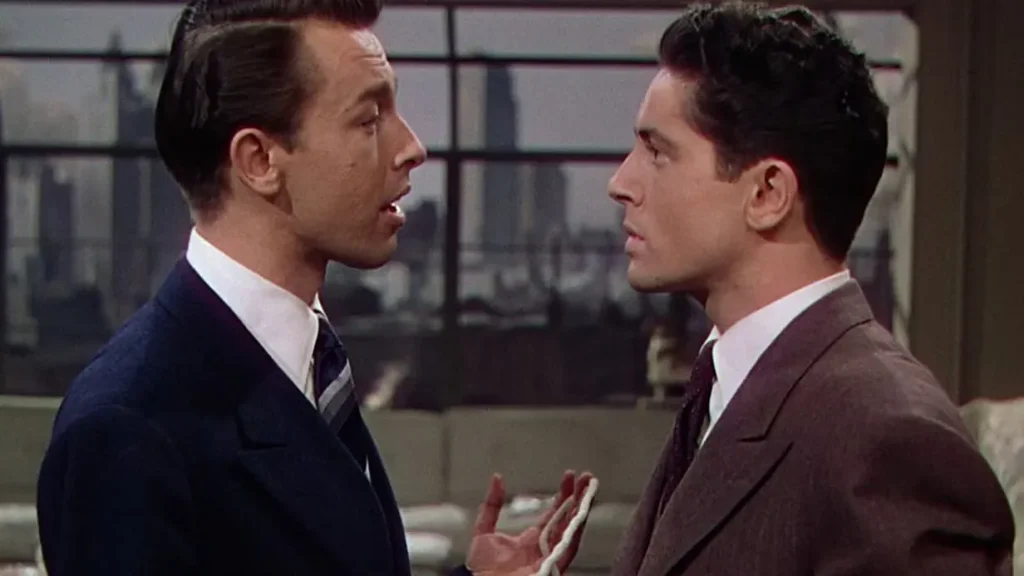
Rope opens with our two main characters, Brandon and Phillip, strangling their old classmate David to death. The body is stuffed in a trunk, the curtains open to the city of Manhattan, they attempt to catch their breath, the dinner party guests are on their way. Brandon lights a cigarette. The deed is done, but not every secret in this room belongs to the body in the trunk.
It’s not the event that just occurred that is intriguing, but how both surviving individuals navigate it. The guests arrive, all connected in some way to Brandon, Phillip, and now David inside the chest, now dressed as the buffet table. Close in on Brandon; Unwaveringly confident, arrogant, and has an answer for everything. A keeper of a secret, nothing suspicious about his vibe. Cut to Phillip, a nervous wreck, visually spiralling, drinking heavily, being eaten alive from the inside out. Both experience shame, both react differently. Which one do you see yourself in? Can I trust you to keep a secret?
The discussion of Nietzsche’s Superman concept is brought up with their old professor as a way of dictating that some individuals are superior to others. Not all men are created equal. Brandon and Phillip believe they are better than others; An irony the film does not let them keep. And in particular with Brandon, the philosophical concept isn’t intellectual curiosity, it’s a shield. Brandon’s superiority complex is just his shame that learned to stand upright. But Phillip feels that superiority as well, he wouldn’t have participated otherwise. It’s not confidence, it’s a story they told themselves to survive. It’s not just ego, if you’ve been following along and reading between the lines, it’s two men in the 1940’s told by law, by church, by society that they were inferior and there’s no place for them among the common folk. Shame was never rejected, they just repurposed it onto someone else.
Zooming out a bit, the cinematography is doing quite a bit of heavy lifting as well. The whole film is meant to appear like one continuous shot, a shaky camera following from living room to kitchen, panning from one conversation to another. Don’t think for a moment this wasn’t intentional. Come on now, it’s Hitchcock for fuck’s sake. You’re not just watching what’s happening, you’re in the room with Brandon and Phillip. You feel trapped in that room, with the tension, shifting into claustrophobia and anxiety. The camera never cuts away because shame never does when it enters the room. No one is yelling cut, no relief, no scene change, no breath. It brings you fully into the present moment, and feels like it stops time.
The Hays Code made sure that film was fit for public consumption from the 1930’s through the 60’s. It made sure there were consequences for taking on subject matter that would be deemed taboo. But Rope does something special. Because it was never really about the body in the trunk, it was about what the body represented; A romantic relationship between two men, hiding behind a murder, both treated the same.
We all have a trunk, hiding something. We’re all hosting a party. Some of us need to be confident, wearing that character like a second skin. Others think everyone already knows, but no one is saying anything. The moment I think of often in this film is the beginning. The silence when there is no struggle, the climax has occurred, they take a moment to catch their breath, and clean up their mess in the dark. A moment where the fear of being caught wasn’t present for just a few minutes. Just before their first guest arrives, you already know its name. Shame keeps the lid to the trunk closed. What would it mean for you if you could open it?
At the time of this post, Rope(1948) is available to stream on Peacock, Galaxy (Free, no account required), or for rent on Amazon Prime, AppleTV, and YouTube.