
The Day Self, The Night Self, and Everything in Between
Code-switching, the sociological practice of adapting one’s communication style to better fit the current scenario. We all do it. Professional at work. Playful with children, Guarded with strangers. The cadence shifts and our tone adjusts, it’s how we communicate effectively.
But it’s not just your voice. It’s the masks you wear, the way you dress, the way you walk into a room.
How many different versions of you exist?
The person that draws the curtains open in the morning. The one who walks into the office. The one who emerges when the sun sets. Some of these variants know each other. Some have never been in the same room.
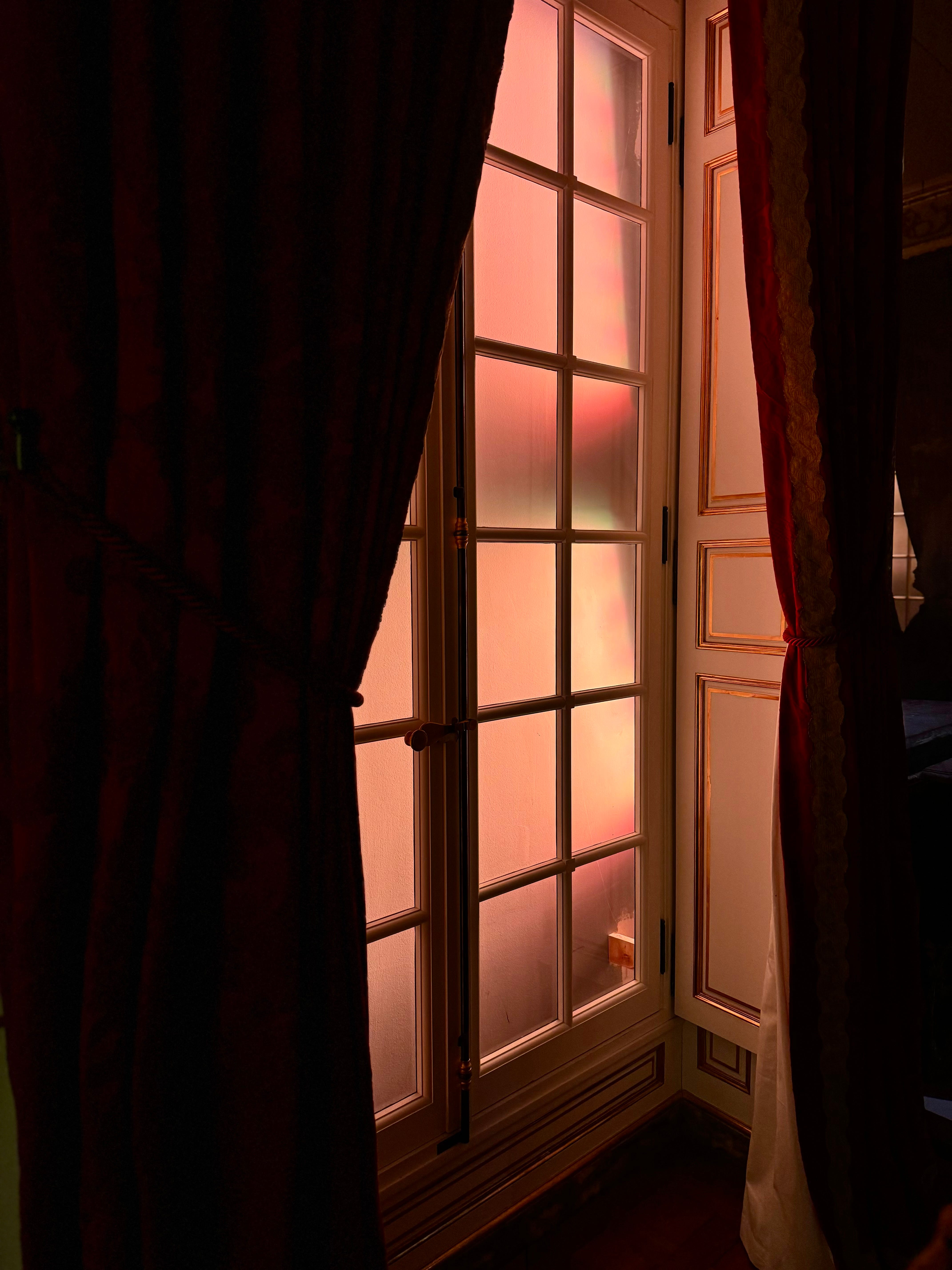
This is about a specific kind of code-switch. The divide of the “day self” and the “night self”.
Let’s get to know the many faces of self. Starting at one end of the spectrum: The Day Self. “Day Self” is the professional you. The one that comes to work is a bit more formal, waves good morning to your neighbors, has a friendly interaction with the barista at your usual coffee shop, and holds the door for the person walking in to grab their latte. This version of you is professional, socially acceptable, curated for public consumption. The Day Self moves through the world with the unspoken rule that it protects the rest of the spectrum. It is telling you not to pay attention to the figure behind the curtain.
Which naturally leads us to the other end of the spectrum: The Night Self. This you enters stage left when you’ve taken the mask off that you present to the colleagues, family, the checkout clerk. This version of you is perhaps curious, exploratory, and unfiltered. It’s the you that your day time circles will never see. This variant is not fit for the morning commute.
Maybe this doesn’t resonate at all. Let’s take a look at our digital personas. Nowhere is there a divide more strategic than our digital lives.
Instagram features a casual version of you. Posts featuring a hiking trip, brunch food, a few selfies. Your community here is made of your friends, maybe a select co-worker or two you let peak behind the curtain a bit.
Facebook is as tame as it gets. That’s where you keep your family, wall posts wishing people a happy birthday, life events, photos you’re tagged in from over 15 years ago you can’t seem to remove for nostalgia’s sake. It’s the safest version you have to offer.
LinkedIn is there to impress. This is the accomplished version of you, there to display your professional achievements, network with others, and the cherry on top is your shiny headshot.
But who lurks behind closed tabs?
Then there’s the other account. The one protecting your anonymity, where your handle couldn’t be traced back to you if your life depended on it. You may have spent longer than you would like to admit workshopping a few names in your notes app on your phone. Maybe you took the one the platform randomly generated for you and ran with it into the night. It exists on dating sites, adult sites, forums, servers,
This version of you is unfiltered, asking questions, exploring thoughts that feel too taboo to bring up anywhere else. It’s a version of you that’s a little bit of a freak, that could damage your reputation. Maybe it’s kinky, maybe it’s politically opinionated. It’s honest in ways that you can’t afford to be on LinkedIn, in the coffee shop, at your office.
And there’s that word. Kinky. The room nobody admits they’ve furnished, the curtains stay closed here. That room is where the curiosities lie before you had a name for them. Searches that started as “just curious” manifesting into a rabbit hole that has its own ecosystem. It speaks a different language, it has a different set of social norms. You learned what makes you tick in the dark, and you’re probably still learning.
Isn’t it funny? We have become sophisticated enough to market it, sell it, stream it, write songs about it, but still find it taboo to talk about sex plainly over coffee or dinner. Talking about sex is still treated like a confession more than a conversation. Therefore, it stays in its own lane, it stays in the night, sometimes it even gets lost in the dark. It’s 10 pm, do you know where your alt is?
But that compartmentalization isn’t always shame (we will get to this next week). Sometimes it’s tactful. The world isn’t always safe to be your whole self in. Not everyone needs the full story. The fact that your curiosities live somewhere private doesn’t make them less important to who you are, it just makes them yours.
Where it gets interesting (if it hasn’t at this point), is when the curtains get drawn back a touch when they are usually fully closed, perhaps more than a touch. Maybe you find a friend you feel like you can talk to about it, or a partner you want to get vulnerable with. You could have found that community, that corner of the internet, or something in real life that makes you feel alive in a way you’ve been desiring. You take the night self and introduce them to someone who can handle knowing both them and your day self, and all the versions of you that lie in between both ends of the spectrum. The veil begins to thin a bit, and for once, it’s a version of honesty that is more intimate than you imagined.
The question is not which you is the real you; they are all real. The LinkedIn headshot, the Sunday Funday selfie on Instagram, the person holding the door at the coffee shop, the persona behind a closed tab. Same person – different time of day.
When we draw back the curtains, we are allowing someone to get a closer look at us. How far back do you draw your curtains to let others peer in?
Maybe the better question is, the next time you do it, are you doing it for them, or are you finally doing it for yourself?