
Buffy The Vampire Slayer & The Gays
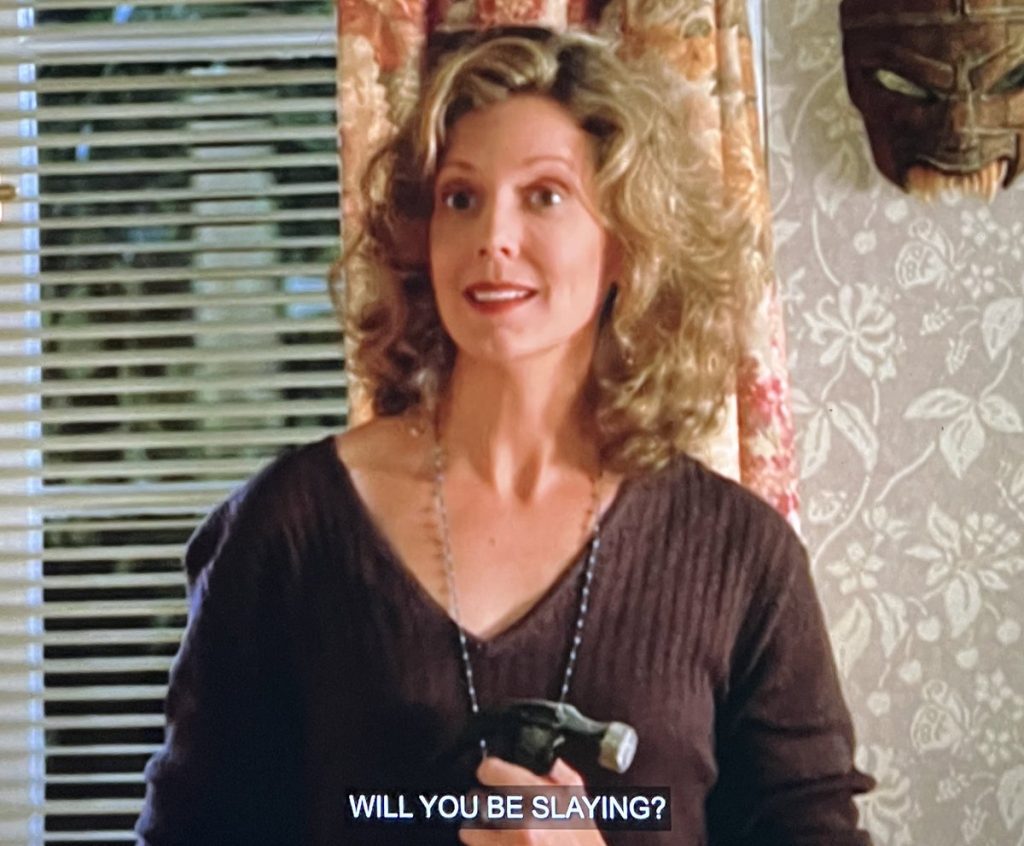
Buffy The Vampire Slayer was, and still is a cultural phenomenon. 7 seasons, 144 episodes, raised an entire generation. Running from 1997-2003, a staple of prime time television, a masterclass in the “monster of the week” style plot building that was always a metaphor for life. It answered the question: What if the pretty blonde girl wasn’t helpless waiting for the hero to come save her, what if she was the hero? It displayed different levels of queerness, some seen for the first time ever on prime time television through the series. Buffy’s best friend Willow coming out as a lesbian, Larry the closeted high school bully, Andrew, the gay guy who never formally came out, but you never really had to question. Giles, the father figure Buffy never had, who believed in her, and comforted her, and stood by her side. But there is a pivotal moment early in the show that will always stick out to me, it was a moment I thought of right before I came out. The scene is from “Becoming Part II”: Buffy and her mother Joyce, in their home, with 2 seasons of secrets finally breaking the surface. It was a moment that for many closeted gay boys and men at the time, made us feel seen, and told us that somehow, we would be okay. Because if she could do it, so could I. Buffy Summers taught me how to be brave.
While this was a blog planned for next week, the recent death of Anthony Stewart Head who played Giles, Buffy’s watcher and father figure, felt like it needed to be brought front and center. The last two years for Buffy fans have been difficult, with the deaths of main cast members Michelle Trachtenberg (Dawn), Nicholas Brendon (Xander) and Head. Not to mention the shelved revamp of the series, executive produced and starring Sarah Michelle Gellar herself. Also, though it has been off air for the last 2 decades, if you have not seen it, there are spoilers ahead.
3 minute clip:
Buffy & Joyce Becoming Part II Scene
For many of us, when the moment finally came (if it came), to tell our parents about who we really are, the scenarios we played the tape forward on for years was about to finally have its moment. Bracing for the look on their face. The moment before, and after, with nothing between. Your mouth gets dry, your palms sweat, your chest tightens. Will there be anger? Will there be confusion? Will there be love when I put a period on that short sentence?
“Have you tried not being a vampire slayer?” is a question I have been asked not just by parents, but by friends, co-workers, strangers. Just with a different noun. But it’s the last 90-seconds of that scene that hits closest to home.
There are two things happening at once in this scene. Buffy, and her self-actualization and acceptance of herself being put to the test. Something she constantly did not want to be, is an accepted part of her nature. She knows she cannot run from it as much as she has tried to. The slayer part of her identity “…doesn’t stop, it never stops.” It was something she was destined to be, it was never a choice. Up until now, we watched Buffy constantly strive to be “normal” and “like everyone else”. Much like our own experiences, acceptance is not a one and done thing, it is something we come into over time, and often isn’t a linear process. Through the entirety of the series, we watch as our heroine battles with letting go of what a traditional life could look like, slowly coming into that acceptance as time goes on.
On the other side of the kitchen, there is Joyce. A single mom, who has felt distant from her daughter since they moved to Sunnydale, CA, going through all stages of grief. She is hypervigilant and imperfect, she is human. Something I believe we don’t talk about enough, is that there is a grief and mourning that our parents go through when we come out. They often fantasize about the individual we will become, creating a plot in their mind of who we will be. There is fear in her voice, not knowing what this means now, just knowing that her daughter is different and she does not know how to make the world a better place for Buffy at the moment. As we watch through the seasons, we see Joyce learn to navigate her own acceptance of Buffy’s sacred duty, from more secrets being revealed to positive enthusiasm of who her daughter is (of which has become an incredible meme nearly 30 years later). It’s a storyline many of us hoped to participate in, but it’s not the truth for some of us.
Buffy Summers is a case study for why many gay men idolize strong female icons. Before we had visible queer heroes, we had characters like Buffy, who let us borrow their heroism. Often told she was too much, carried the weight of her burden alone, punished and ridiculed for her power, but kept pushing through to do the right thing. Surrounded by people who loved and cared about her, and made those around her want to be brave and better for the sake of good.
While Buffy is surrounded by her friends and allies, none of them can truly empathize with her experience. Enter Kendra and Faith, the other Slayers in the series (it’s a long story. Buffy died for like a minute. Okay, not that long). They are equals in experience for Buffy and her slayer identity, no longer the only one she knows with the burden of her secret. Both Kendra and Faith are examples of gratitude for the life that Buffy has. Kendra moves in isolation because she was taught to, her culture has different perspectives on the slayer line, she is even shocked at how many know about Buffy’s secret. Faith rejects the community that attempts to take her in because she does not want anyone getting close, because she has experienced so much loss already. She is afraid to let anyone in. Buffy, Kendra, Faith, we have been one, if not all of these individuals at some point in our lives. They are examples of different paths we could take, because while we didn’t choose to be this way, we have a choice in how we want to move through the world.
When Buffy said “Mom, I’m a Vampire Slayer,” the world was a different place. There is more acceptance today, parents are better prepared for these conversations, but not all of them are. A scene like that still has the power to connect with someone. Buffy The Vampire Slayer showed us that coming out is not the end of the story, it is the beginning. It’s a milestone that allows us to maneuver with a little bit more freedom into self-actualization. Bravery does not dissolve loneliness. The bravery is about walking forward regardless of the results of our current circumstances. Knowing that somehow, everything will eventually be okay, even if we cannot see how in the moment. It’s a wisdom I hope we continue to pass on through queer generations to come. Because in every generation, a Slayer is born.